Our Back Field of Dreams

Our Back Field, Hunger Hill
4th & 11th October 2020

The work of small local groups often goes unnoticed. In 2009 the Hunger Hill Action Group established itself to develop a patch of land behind Knutshaw Crescent for local amenity. The housing estate sits on the busy A58 where there were no safe areas for children or families to play and relax, and so the Action Group was born.

The land is jointly owned by Bolton at Home and Peel Holdings who were happy to let the group use it. With the help of Councilor Bernadette Eckersley-Fallon the group set about gaining grant funding, and then began the hard work of building paths, play areas, community art, and other stuff. The project was named Our Back Field. We think that the Wildlife Trust may have been involved in the original heavy work but that’s still to be confirmed.

Seating Area
Seating Area
Board Walk
Board Walk

Fast forward to 2020 and the site’s numerous paths, open green spaces and pond had become over grown and in need of help. Chris, the original founder of the Action Group, approached Bolton Green Umbrella, who introduced her to Bolton Conservation Volunteers, and like the A Team, we love it when a plan comes together.

After delays and set backs caused by the ever changing lockdown rules, and after extensive risk assessments, we finally got to start work on the site. BCV has been following the Rule of Six since before it had a name and the work on this site was no different. The task was split into two teams of six spread over two weekends.

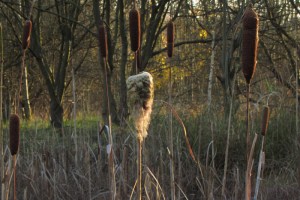
Reed Mace
Reed Mace
Great Crested Newt
Great Crested Newt

On 4th October the target was pond and path work, the pond, which may originally have been an old farm pond, was choked with typha (reedmace). This was dug out and pulled out to create some open water for amphibians. A nearby path also received some attention. Future work could include replacing boardwalks. Although originally meant for amenity the site has good potential for wildlife which we hope we can build on over time.

11th October. With a fresh set of six, including a new volunteer, we started the next stage of our Hunger Hill task which involved improving access through the woodland. We cut back over hanging and encroaching branches to create more room and also cut away branches behind the path to let more light through to the path and the woodland understorey. This will make the walk more pleasant, safer, and also encourage the regrowth and regeneration of woodland flora.

Most of the residents were appreciative of the work we’ve done, although one gentleman took issue with the coppicing of the big willow in the pond the previous week. This tree was cut back to allow more light to get to the pond and reduce leaf litter, improving the oxygen saturation of the pond water and so improving conditions for pond life. Historically the pond contained great crested newt and is the reason why the pond hadn’t been filled in or the site developed for housing. Rick is planning to carry out a pond survey at a later date.

The same gentleman also took issue with the drainage of the path. The pre-existing drain had been cleaned out but he believed that this act had caused the pond to backflow onto the path causing flooding. This does highlight one of the problems of volunteer work: a group of volunteers, working in their own time to benefit a community they don’t live in, can’t please everyone.

Many thanks to Christine for inviting us to help her with her plans for the site, it’s a great site and deserves to flourish. We look forward to helping out again in the future.

Moses (Gate) Hidden in the Reeds

Moses Gate Country Park, Reedbed Management, 23rd August

Phragmites australis, or common reed, reedbeds are a declining habitat, this is a shame as they support over 700 species of invertebrate, at least 6 red listed bird species, 4 reedbed dependent bird species, as well as amphibians, fish and the several mammals. They are hugely important for maintaining water quality and can also provide some degree of flood defence. The pressures created by land drainage, water abstraction and poor management are just a few of the reason why many reedbeds have been lost. If they are lost then we also lose the species that depend on them.

Reed Bunting
Reed Bunting
Reed Warbler
Reed Warbler

Many thanks to John Loder for the reed warbler photo.

Samuel Crompton’s old workshop became the promised land of reedbeds thanks to BCV. Over the last couple of decades we have planted reeds at different points around Crompton Lodges. Starting from a few square metres the reeds have expanded and spread to cover a large portion of the top lodge. But it isn’t enough, we want more. We have the space but there’s not enough water, so, what can we do to fix it?

With the permission of Bolton Council, the plan is to alter the flow of a small stream running into the candidate area by digging ditches across the site to re-wet the not-so-wet swamp. We will also need to do some planting, the good thing is that planting new reedbeds is fairly straight forward, read BCV’s own guide by clicking the button below.

Some of our soggy six believe this was the wettest task ever, but I can remember tasks at Blackleach, Cox Green, Wigan Flashes and several Anderton weekends which were at least as bad. Not to mention last year’s Bolton to Darwen walk.

So, what did our mud monkeys do? Around the perimeter of the site there’s a ditch that intercepts water entering the proposed reedbed which isn’t ideal as we want more water not less. The plan was to cut irrigation channels and allow more water to access the reedbed area from the ditch. Using a digger would have been more convenient but volunteers are easier to replace when they get damaged. Well done to all on an impressive piece of digging.

Photos: 23rd August – Tom Bruce/Francis Williams

Where Ousels Dare

Ousel’s Nest Quarry LNR, Chapletown Road, Bolton. 2nd, 9th, and 16th August 2020

First we were 6, then we were 10, then along comes local lockdown and we’re 6 again. Covid came once more with a pocketful of posies but this time we didn’t fall down and our planned work on the Ousel’s Nest meadow continued with 6 safe volunteers.

We have been working at Ousel’s Nest Quarry, part of Jumbles Country Park, since 2014. The site is looked after by Sam Kitchen for the Wildlife Trust and hosts a range of species including damselflies, dragonflies, frogs, toads, yellow rattle, orchids, knapweed, numerous birds but oddly no ring ousels. At one time the meadow was much richer and Sam’s aim is to restore it to its original state.

Yellow Rattle
Yellow Rattle
Common Spotted Orchid
Knap Weed
Knap Weed

Wildflowers meadows provide important nectar sources for bees, butterflies, hoverflies, and moths but they can become dominated by grasses, reducing the meadow’s diversity. To reduce the prevalence of grasses on this site BCV have used yellow rattle, a hemi-parasitic wildflower that literally drains coarse grass species of nutrient by entwining itself if the grass’s root system, weakening its growth. Over time the grass’ vitality is reduced and wildflowers have more of a fighting chance to recover.

2nd August 2020 involved mowing the meadow and removing the cuttings to reduce nutrient, improving conditions for wildflowers the rarest of which prefer low nutrient soils. The team also collected yellow rattle seeds to re-sow at a later date.

9th August 2020 – Today’s task was mostly raking up the grass cut down by Tom and Clayton the day before. More cutting was done by Dave and Clayton using Tom’s new toy but this time just the balsam. Although there was only 6 of us we managed to clear most of the meadow of mown grass which means less nutrient being returned to the soil.

16 August 2020 – Last time out on this epic task. Today our fearsome six bashed balsam, moved grass and cut up a fallen tree. But what to do with all the bits? The solution was to build a hibernaculum, a hotel for amphibians to hibernate in over the winter. 2000 years ago a Hibernaculum was a winter camp for Roman legionnaires today its a winter palace for frogs and toads. Well done team, the meadow should look great next year.

Photos: 2nd Aug – Caroline Bruce, 9th Aug – Colin Mather, 16th – Gill Whelan
Photo gallery now has download button in top right corner.

Educating Washacre

Washacre Primary School, Westhoughton 19th and 26th June 2020

Washacre Primary School, Westhoughton first developed an outdoor education plot in 1991, it could well have been one of the first built with the help of the Wildlife Trust’s Bolton Wildlife Project. The site was turned from a patch of rough grassland into a meadow and a woodland surrounding a pond.

Like a lot of similar sites there were questions about how to use and manage these resources and the school approached the Bolton Wildlife Project in 1995 for help. What’s happened in the last 25 years we don’t know except at some point a willow dome was built. So, when BCV arrived things were a bit overrun, the pond had filled in and not much could be seen of it’s former greatness.

The first cohort of our intrepid socially distanced six, Tom’s Treehuggers, got to work and cut back the vegetation, gave the willow dome a haircut, and dug out the planters. Tom ordered some heavy machinery from Trucks ‘R’ Us but wasn’t impressed with the size of the diggers when they arrived. Anyway, they got the job done.

UPDATE – 28/07/20
Rick’s Rangers continued the work on the 26th by digging out a bit more of the pond and clearing more the earth from the area around the raised beds, finishing off with a layer of chippings. Finally a belated presentation to Dave of his hedgelaying prize. You can find out what that was about by going to Hedge Wars 2020.

Many thanks to Jackie (Anna’s mum) at Washacre Primary for asking us to work on this site, and well done to everyone for doing a great job. Hopefully there’s more to come.

Photos: 19th June: Jo Nalton, 26th June: Colin Mather

Back to Blackleach

Pond work at Blackleach Country Park, Walkden, Salford 05/07/20 to 12/07/20

Pond work at Blackleach Country Park, Walkden, Salford 05/07/20 to 12/07/20

Blackleach was originally an industrial site. Built in 1778 the reservoir was used to power mining machinery but later the site was used for brick making and finally as a chemical factory making Salford’s distinctive magenta dye. Industrial activity ended in 1976 and the site was abandoned to nature.

In 1987 the reservoirs were earmarked for housing but a campaign lead by local action groups saved the site and in 1992 the Salford Rangers Service began to transform Blackleach from a desolate wasteland in to its premier wildlife reserve. The Greater Manchester Ecology Unit designates Blackleach as a Site of Biological Importance because of its habitats and resident species, and 2004 English Nature declared it a Local Nature Reserve.

BCV has had a long association with Blackleach working with both the site’s first warden and developer, Annie Surtees, and later with warden Richard Marshall. This time our socially distanced and volunteer numbers restricted task involved pulling out Typha latifolia, aka reed mace, aka bull rush.

Brown Hawker
Brown Hawker
Reed Mace
Reed Mace
Great Crested Newt
Great Crested Newt

As Typha spreads it closes ponds down, reducing the area of open water available for amphibians and insects such as great crested newts and dragonflies. Blackleach is hotspot for the UK’s largest newt, the great crested newt. GCN are highly protected and should only be handled by authorised licence holders.

Photos below supplied by Caroline, common hawker by Francis. Posts now show a Like button, also feel free to leave comments.

Being There

Walmsley Unitarian Chapel 14/06/20 – 28/06/20

Our last normal task before lockdown was at Firwood Fold on 23rd March. Since then our volunteers have been busily doing nothing Zooming the whole day through, not to mention WhatsApp, Skype, and that quaint practice, telephoning. None of these are any substitute for being out in the open with the wind in your hair and the sun on your face, no substitute for being there. So, our first task after lockdown was Walmsley Unitarian Chapel.

We have been working at Walmsley Unitarian Chapel since 2010 and over that time we have turned the site, also known as Spring Meadow, from a swampy patch of willow carr into a wildlife wonderland, home to numerous species of dragonflies, amphibs, and orchids. However, like all things it needs looking after. So, over three weekends, between 14th and 28th June, three teams of socially distanced six tidied up the ponds, unblocked culverts and slashed the Himalayan balsam to within an inch of its first node.

Common Spotted Orchid

Pulling out excessive vegetation such as typha creates more open water for amphibians and dragonflies and stops the ponds succeeding to swamp then to dry land. Himalayan balsam is another species that displaces native flora, over the years we have knocked it back considerably but there is still a long way to go. The 28th was supposed to have been our big push against the balsam but rain (lots of rain) stopped play. What we did do you can see in the photo gallery further down the page.

Himalayan Balsam
Himalayan Balsam

Over the last few months many of our members have experience tragedies, illnesses and injuries, but despite the distances imposed by lockdown they have never had to endure their hardships alone, so a big thank you to all our members who helped out and gave their time to those in need. Thank you for being there.

To go with our new website there is a new gallery feature, clicking/tapping an image opens a lightbox where you can move through photos by swiping or using the arrows at the sides. There is also an button to show full screen and an arrow to start a slideshow. Enjoy.